|
Welcome to the Jeff Pierce Photography blog. Hope you enjoy the content. We also welcome any comments.
Ecosystem diversity
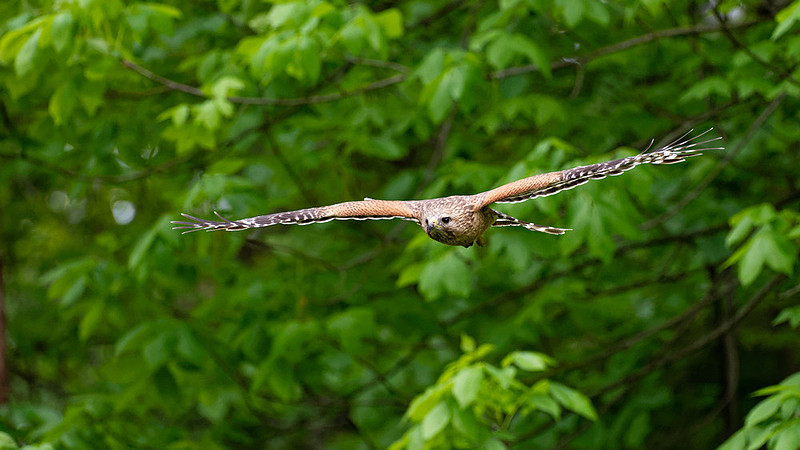
I am very fortunate to live in an area that hosts diverse wildlife. I live in a US Midwest neighborhood and have seen bobcat, deer, fox, coyote, hawks, barred owls, blue herons, bald eagles, and a variety of migrating songbirds. But this diversity may not necessarily reveal a healthy ecosystem. A creek runs near my home and it is frequently littered with garbage, pollutants and algae blooms. While I have seen herons and hawks fishing there, I wonder what quality of food can be extracted from that creek. The creek runs through woods containing a wide variety of invasive and non-native plants. All of our area parks are at war with invasive honeysuckle and Bradford pears. Many of the flowers blooming during spring and summer are invasive. Some species, such as coyotes, are remarkably adaptable and can live in close proximity to people. Others are "edge" species, such as deer, whose populations have expanded due to habitat fragmentation. Others hang on in an ever shrinking era of "development" where habitat loss is ongoing. I have noticed an uptick in crow populations this year, the crow being the ideal occupant of a disrupted ecosystem. It might be easy to think that seeing abundant wildlife indicates that all is well and we have nothing to guard against. But it may also be that what we are seeing is an indication of a disrupted ecosystem.
Alaska - Family Style
It's been almost a year since my Alaska trip ended. It was one of those once-in-a-lifetime opportunities to visit Alaska, but it was not going to be a photography adventure. It was a family vacation. There would be lots of family and pre-planned activities that may not involve any camera use. There would be no time to set up a tripod or wait out wildlife for the great shot. I did a lot of research on what an Alaska trip might be like, and took a close look at the agenda that had been planned out for us. This lead to a shopping trip at B&H, of course.
Requirements I needed fast and light gear. I would need as much reach as possible with a long lens, but it had to be portable and easy to wield in cramped spaces. I also needed wide-angle and something close focusing, but there would be no time for true macro. In other words, compromise. It also all had to fit into a Lowepro Slingshot 202AW bag. I decided to take my Nikon D850, but the 200-500mm f5.6E that I already owned was way too big and heavy for such a trip. After several shopping sprees at B&H, this is the gear I ended up taking.
Gear Nikon D850 Nikon AF-P 70-300 f4.5-5.6E VR lens Nikon 24mm f1.8G ED Nikon 50mm f1.4D Polarizers for all lenses Travel tripod - Vanguard VEO 3T+ with integrated Arca ballhead Memory card - Sony XQD 128G Extra memory card - Sony XQD 64G Cable release Rocket blower, micro fiber cloth Lowepro Slingshot 202AW sling bag
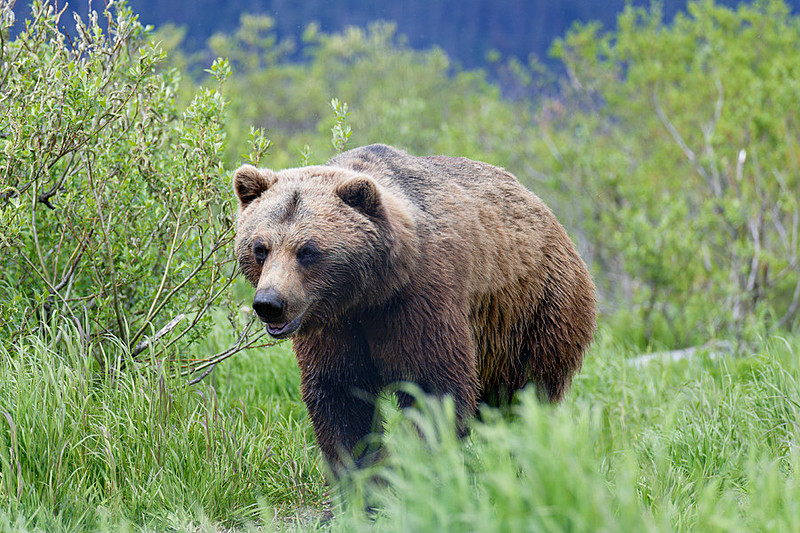
In-use I knew 300mm was going to be a compromise, and it was. But I loved the 70-300 VR for its light weight, speed and outstanding image quality. The only thing I wished I had was the 500mm f5.6E. But that was way more expensive, heavy and would not have fit in my bag. I believe 300mm is the absolute minimum long-end focal length for Alaska. I did not get as much use from the 24mm as I expected. I used it mostly at the Seward boat docks. The Alaska landscape is so vast that the 70-300 was my landscape lens also. I did not expect the 70-300 to be such an outstanding all-around lens. It even focuses close enough to get plant and flower photos. I don't believe I ever used the 50mm lens. As I expected, there was little time for wildlife photos. The exception was the boat tour of Resurrection Bay (that's where I was craving 500mm). We also visited the wildlife sanctuary, where I got a couple of captive bear photos.
Overall, I was pleased with the gear, opportunities and results. It left me wanting more, for sure. To see more from this trip, visit my Alaska gallery
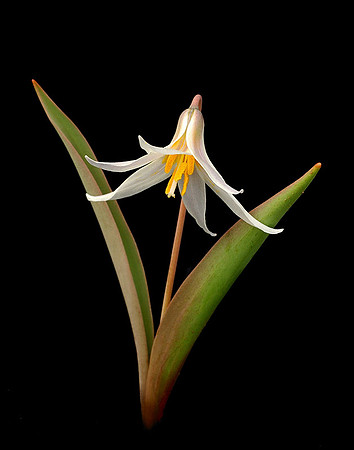
Down and Dirty with Macro PhotographyEarly spring wildflowers can be really small. Photographing them sometimes requires getting down in the dirt with your tripod flat on the ground. This kind of photography can mean some serious mud-wallowing. Add to that the often gusty winds and bright sunshine of Spring weather and you have some serious impediments to your macro work. To help ease the pain, I use a small portable light tent as my photo assistant. The light tent helps block the wind and provides a fantastic diffuse light source. Add a little custom background with some reflectors and you have a portable macro studio for photographing flowers in the wild. No need to injure the plants - all my work with live plants is done in the field.
Early in the growing season I get some strange looks from passers-by. Often the only thing growing will be a 2-inch high flower that most folks would never even notice. My light tent and macro setup is such a versatile combination of gear that I now carry it everywhere I photograph. I also carry plenty of Deet in an outside pocket. Even in the early spring, ticks and chiggers can be active. I think the results are worth the effort, though. To see more content, visit my wildflower gallery.
Erythronium mesochoreum (Prairie Trout Lily) #2 http://www.jeffpiercephotography.com/p6566842/h245d9653#h245d9653
© Jeff Pierce Photography
|